


Publication Frequency
Semi-annual
Journal Articles
Search
Search scope
Volume Arrangement
Featured Articles
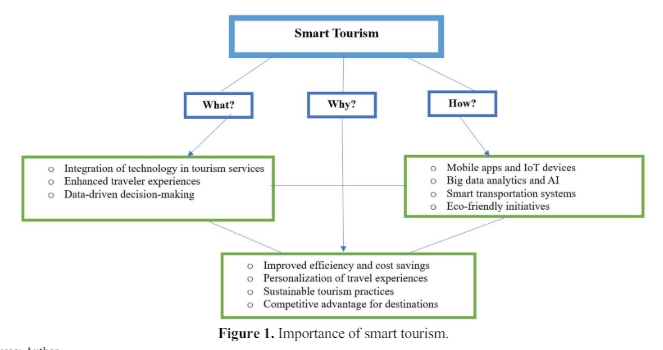
This commentary critically examines the integration of smart tourism technologies within the tourism and hospitality sectors, focusing on their role in enhancing tourist experiences and operational efficiencies. Through a multidisciplinary approach encompassing a literature review, case studies, and empirical data analysis, the analysis adopts a constructivist perspective to explore tourists’ subjective experiences with technology. It highlights significant personalization, efficiency, and sustainability advancements while acknowledging challenges related to digital infrastructure and privacy concerns. Advocating for a balanced and sustainable approach that respects environmental integrity and cultural heritage, the commentary concludes with recommendations for future research on the socio-economic impacts of smart tourism, ethical data usage, and the adaptation of technologies to diverse contexts. It calls for increased investment in digital infrastructure and stakeholder collaborative efforts to promote sustainable and inclusive tourism development.
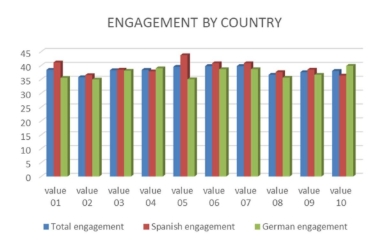
The importance of the image of the tourist destination in the communication and marketing of a tourist destination is beyond doubt. For this reason, numerous studies address these issues. However, not so many do so from the perspective of the emotion the receiver feels, which is why this study deals with analyzing the emotion generated in the receiver through neuromarketing techniques and measuring the level of engagement felt. As a fundamental part of this study, we added the variable of cultural differences, both generically and specifically for gender and age. We are mainly guided by the theories of Life Cycle Theory and Generational Theory to analyze age differences. At the same time, gender differences are approached from the Gender Role Theory. The sample comprises one hundred individuals with apparent cultural differences, one sample of German origin and residence and the other of Spanish origin and residence, 50/50. We approached the study from the point of view of the emotion felt by the receiver of the message based on ten neuromarketing techniques (EGG) and ten images used by a famous tourist destination known in both countries. The results suggest that not only are there differences in the emotion felt after viewing images of a tourist destination, but that these differences are also explained by cultural background, gender, and age.
| Issue | Title | |
| Vol 5, No 2 (2024) | Bibliometrics approach to portray the research agenda of film and television tourism | Abstract PDF |
| Songyu Jiang, Jiangyun Chen, Han Wang, Nutteera Phakdeephirot | ||
| Vol 5, No 1 (2024) | Decoding tourist experiences in the digital age: An introductory guide to conducting interviews in smart tourism research | Abstract PDF |
| Mohammad Shahidul Islam | ||
| Vol 5, No 1 (2024) | From data privacy to environmental sustainability: Comprehensive perspectives on smart tourism challenges | Abstract PDF |
| Mohammad Shahidul Islam | ||
| Vol 5, No 1 (2024) | Exploring Australian travellers’ satisfaction with traditional accommodations in Invercargill, New Zealand | Abstract PDF |
| Terry Theodore Iskandar, Indrapriya Kularatne | ||
| Vol 4, No 1 (2023) | UaiGuia: Enhancing tourist experiences in São João del-Rei, Brazil, through personalized route creation and cultural immersion | Abstract PDF |
| Franciane Pereira Gonçalves, Dárlinton Barbosa Feres Carvalho, Vinícius Figueiredo de Faria, Matheus Carvalho Viana, Elverton Carvalho Fazzion, Fábio Corrêa | ||
| Vol 4, No 1 (2023) | Relationship between competitiveness of destinations and tourism specialization: An analysis in the digital age | Abstract PDF |
| José Carlos Collado-González, Alejandro Alcalá-Ordoñez, Pablo Juan Cárdenas-García | ||
| Vol 5, No 1 (2024) | Using social exchange theory to predict residents’ perspective on factors influencing tourism development in Pokhara | Abstract PDF |
| Samikshya Poudel, Devid Kumar Basyal, Niranjan Devkota, Udaya Raj Paudel, Purnima Lawaju, Ranjana Kumari Danuwar | ||
| Vol 5, No 1 (2024) | Risk management strategies for smart hotel supply chain | Abstract PDF |
| Mohammad Shahidul Islam, Md Shamimul Islam | ||
| Vol 4, No 1 (2023) | Incorporating perceived responsibility on tourism sustainability in tourist typology through the knowledge gap theory | Abstract PDF |
| Cindia Ching Chi Lam, Ying Zhao, Eliza Si Kei Leong | ||
| Vol 5, No 1 (2024) | Intelligent technologies and applications in Smart Tourism—A systematic review | Abstract PDF |
| Chi Fai Si-Tou | ||
| Vol 5, No 2 (2024) | Sustainable and smart: Evaluating São Paulo’s tourist resorts with the “DTI-BR Model” | Abstract PDF |
| Alessandra Bussador, Bárbara F. C. Bauermann, Miguel D. Matrakas | ||
| Vol 6, No 1 (2025) | A hedonic approach to study willingness to pay for certified green hotel by customers in Thailand | Abstract PDF |
| Lorna Uden, Suppanunta Romprasert | ||
| Vol 5, No 2 (2024) | Construction of the tourist sentiment dictionary for hotels to mining tourist demands: Based on Macao’s hotel reviews from Agoda | Abstract PDF |
| Linyu Wang, Xiaohan Zhu, Hongbin Zhang, Chenhe Zhang, Jiajun Xu, Zhaochen Zhang | ||
| Vol 5, No 2 (2024) | Exploring tourism SMEs crisis management practices during Covid-19 at Boudha, Kathmandu | Abstract PDF |
| Asmita Oli, Niranjan Devkota, Ranjana Kumari Danuwar, Mijala Kayestha, Ajaya Dhakal, Deep Kumar Baral, Dhurba Prasad Timalsina, Amita Koirala, Devi Raman Tiwari | ||
| Vol 5, No 2 (2024) | Research of the nature of implementation of environmental innovations as a factor of ensuring competitiveness of hotel hospitality business | Abstract PDF |
| Novruz Guliev Amirkhan, Veronika Alieva Samedovna, Samir Babazade Ismail, Hikmat Guliyev Nazim | ||
| Vol 6, No 1 (2025) | Exploring the transformation of wine tourism through metaverse technology | Abstract PDF |
| Zhisheng Chen | ||
| Vol 5, No 2 (2024) | Investigating of social media travel photos on future destination choice: A mixed methodology approach | Abstract PDF |
| Chi Fai SiTou, Ja Young (Jacey) Choe, Amy Siu Ian So, Rob Law | ||
| Vol 5, No 2 (2024) | Exploring post-COVID-19 travel intentions of foreign tourists in Nepal: An empirical study using structural equation modeling | Abstract PDF |
| Purnima Lawaju, Anup K. C., Niranjan Devkota, Devid Kumar Basyal, Sushanta Kumar Mahapatra, Udaya Raj Paudel, Sahadeb Upretee, Kolin Kiran Shrestha | ||
| Vol 5, No 2 (2024) | Predicting sustainability for slowtourism events | Abstract PDF |
| Michele Angelaccio, Lucia Zappitelli | ||
| Vol 5, No 2 (2024) | A survey of heritage resources for tourism development in Ikem, Isi-Uzo local government area of Enugu State, Nigeria | Abstract PDF |
| Elochukwu A. Nwankwo, Cynthia E. Ede | ||
| Vol 5, No 2 (2024) | Systems of tourism sustainability indicators: A comparative analysis of the international, European, and Spanish proposals | Abstract PDF |
| Andres Artal-Tur, Lourdes Badillo-Amador | ||
| Vol 5, No 2 (2024) | Derbent’s underwater cultural heritage as a tourist resource | Abstract PDF |
| Eldar M. Eldarov, Sergey M. Fazlullin | ||
| Vol 5, No 2 (2024) | Navigating overtourism destinations: Leveraging smart tourism solutions for sustainable travel experience | Abstract PDF |
| Majid Mohammad Shafiee | ||
| Vol 5, No 2 (2024) | Brand strengthening of the local wisdom “traditional drink arak—Bali” to support tourism in Indonesia | Abstract PDF |
| Ni Luh Putu Agustini Karta, Ni Made Ary Widiastini, Ni Ketut Dewi Irwanti, Ni Made Christine Dwiyanti | ||
| Vol 5, No 2 (2024) | Environment and blue tourism: Moving towards sustainability—6th maritime tourism observatory for Skyros Island | Abstract PDF |
| Gerasimina Theodora Zapanti, Ioannis Theodoulou, Kyriakos Antonopoulos, Constantina Skanavis | ||
| 26 - 50 of 124 Items | << < 1 2 3 4 5 > >> | |
Editor-in-Chief

Prof. Hung-Che Wu
Nanfang College, Guangzhou
China
Indexing & Archiving

.jpg)
.jpg)

.jpg)



News & Announcements
2025-01-09
A Thank You Letter from Smart Tourism!
As we bid farewell to 2024, we take immense pride in reflecting on the 28 distinguished works that have been meticulously published online following a rigorous peer-review process. We extend our heartfelt gratitude for authors' invaluable contributions, reviewers' steadfast support, and EBM's insightful guidance throughout the year. Your dedication and expertise have been instrumental in propelling Smart Tourism towards its current success.
2024-07-05
Call for Reading: Volume 5 Issue 1 Available
We are pleased to announce the release of Volume 5 Issue 1 of Smart Tourism. We sincerely invite researchers to download and read articles in this issue. It is hopeful that the content will bring readers new perspectives and inspire the research in related field.
2024-01-15
New layout style in 2024
In 2024, Smart Tourism will adopt a new layout style. Please turn to the "Author Guidelines" for preparing your manuscripts.
Journal Center
Asia Pacific Academy of Science Pte. Ltd. (APACSCI) specializes in international journal publishing. APACSCI adopts the open access publishing model and provides an important communication bridge for academic groups whose interest fields include engineering, technology, medicine, computer, mathematics, agriculture and forestry, and environment.